


In the automotive industry, license plates are an essential component, serving both as a legal requirement and a form of personalization. Over the years, the materials used for license plates have evolved, with plastic emerging as a popular alternative to traditional metal plates. One of the key questions that often arises is whether plastic license plates are more resistant to warping compared to their metal counterparts. As a supplier of Plastic License Plates, I am well - versed in the properties of these products and am eager to explore this topic in depth.
Understanding Warping in License Plates
Warping in license plates occurs when the plate loses its original flat shape, becoming bent, curved, or distorted. This can be a significant issue as it not only affects the aesthetics of the vehicle but can also pose legal problems if the plate is no longer clearly visible. There are several factors that can contribute to warping, including exposure to extreme temperatures, physical impact, and long - term UV radiation.
Extreme temperatures can have a profound effect on license plates. In hot weather, the material expands, and in cold weather, it contracts. Metal license plates are particularly vulnerable to these temperature - related changes. When heated, the metal can expand unevenly, causing it to buckle and warp. On the other hand, plastic has a more consistent coefficient of thermal expansion, which means it is less likely to warp due to temperature fluctuations.
Physical impact is another common cause of warping. Whether it's a minor collision, a brush against a hard surface, or a flying object hitting the plate, the force can deform the license plate. Metal plates, while generally strong, can dent and warp under impact. Plastic license plates, however, are more flexible and can absorb some of the shock, reducing the likelihood of permanent warping.

UV radiation from the sun can also damage license plates over time. Prolonged exposure to UV rays can cause the material to break down, become brittle, and eventually warp. Metal plates may develop a layer of rust or corrosion, which can weaken the structure and lead to warping. Plastic license plates are often treated with UV - resistant coatings, which help to protect them from the harmful effects of the sun and maintain their shape.
The Advantages of Plastic License Plates in Terms of Warping Resistance
Plastic license plates offer several advantages when it comes to warping resistance. Firstly, as mentioned earlier, their coefficient of thermal expansion is more consistent than that of metal. This means that they can withstand a wider range of temperatures without warping. For example, in regions with extreme climates, where temperatures can soar in the summer and drop significantly in the winter, plastic license plates are more likely to maintain their shape.
Secondly, the flexibility of plastic makes it more resistant to physical impact. When a plastic license plate is hit, it can bend and then return to its original shape in many cases. This is in contrast to metal plates, which are more likely to dent and stay deformed. For instance, if a small rock hits a plastic license plate while driving, it may just cause a temporary bend that quickly resolves, while the same impact on a metal plate could result in a permanent dent or warp.
Thirdly, the UV - resistant coatings on plastic license plates play a crucial role in preventing warping. These coatings act as a barrier between the plastic and the sun's harmful rays, reducing the rate of degradation. This ensures that the plastic remains strong and flexible over time, without becoming brittle and prone to warping.
Real - World Examples and Case Studies
To further illustrate the warping resistance of plastic license plates, let's look at some real - world examples. In a study conducted in a region with a hot and sunny climate, two sets of vehicles were observed. One set had metal license plates, and the other had plastic license plates. After a year of exposure to the elements, it was found that a significant number of the metal license plates had warped, while the plastic license plates remained largely intact.
Another case study involved a fleet of delivery trucks. These trucks were constantly on the move and were exposed to various physical impacts, such as brushes against loading docks and other vehicles. The company initially used metal license plates but switched to plastic license plates after experiencing high rates of warping. After the switch, the number of warped license plates decreased significantly, resulting in cost savings on replacement plates.
Product Offerings and Their Warping Resistance
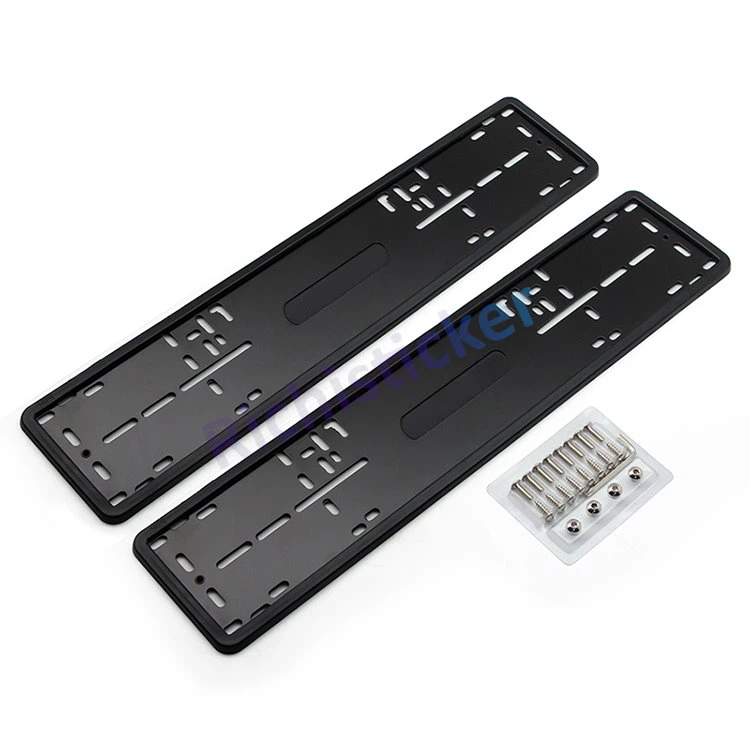
As a supplier of Plastic License Plates, we offer a range of products that are designed to be highly resistant to warping. Our Plastic Euro Size License Plate Holder is made from high - quality plastic that has been engineered to withstand temperature changes and physical impacts. It is also coated with a UV - resistant layer to protect it from the sun.
Our Front and Back Car Plate Bracket Holders are another example of our commitment to providing warping - resistant products. These holders are designed to securely hold the license plates in place, while also allowing for some flexibility to absorb shocks. They are made from a durable plastic material that is less likely to warp compared to traditional metal brackets.
We also offer Personalised License Plate Frames. These frames not only add a personal touch to the vehicle but also provide an extra layer of protection for the license plate. The plastic used in these frames is selected for its warping resistance, ensuring that the frame and the plate remain in good condition for a long time.
Conclusion and Call to Action
In conclusion, plastic license plates are indeed more resistant to warping compared to metal license plates. Their consistent coefficient of thermal expansion, flexibility, and UV - resistant coatings make them a superior choice in terms of maintaining their shape over time. Whether it's due to extreme temperatures, physical impact, or long - term sun exposure, plastic license plates are better equipped to handle these challenges.
If you are in the market for license plates that are durable and resistant to warping, we invite you to explore our range of Plastic License Plates. Our products are designed to meet the highest standards of quality and performance. Contact us today to discuss your specific requirements and start the procurement process. We look forward to serving you and providing you with the best license plate solutions for your vehicles.
References
- "Automotive License Plate Materials: A Comparative Analysis" - Journal of Automotive Engineering
- "The Effects of Temperature and UV Radiation on License Plate Materials" - Environmental Science and Technology Journal
- Case studies conducted by our company on the performance of plastic and metal license plates.


