


In the automotive industry, license plates are not just identifiers; they are also subject to various physical forces, including shocks from daily driving, minor collisions, and environmental impacts. As a leading supplier of plastic license plates, I've often been asked whether plastic license plates are more shock - absorbent compared to their metal counterparts. In this blog, I'll delve into the science behind shock absorption and explore the characteristics of plastic license plates.
Understanding Shock Absorption
Shock absorption is the ability of a material to dissipate energy when it experiences an impact. When a license plate is hit, the energy from the impact needs to be absorbed or transferred away to prevent damage to the plate and, in some cases, the vehicle. Materials with good shock - absorbing properties can reduce the force of the impact and prevent cracks, dents, or breakage.
The key factors that determine a material's shock - absorbing ability include its elasticity, density, and molecular structure. Elastic materials can deform under stress and then return to their original shape, which allows them to absorb and release energy. Density also plays a role; materials with lower density may be more flexible and better at distributing the impact force.
The Properties of Plastic License Plates
Plastic is a diverse group of materials, and the type used for license plates can vary. Common plastics used in license plate manufacturing include polycarbonate, acrylic, and ABS (acrylonitrile butadiene styrene). These plastics have several properties that contribute to their potential shock - absorbing capabilities.
Elasticity
Most plastics used in license plates have a certain degree of elasticity. For example, polycarbonate is known for its high impact resistance and flexibility. When a polycarbonate license plate is subjected to a shock, it can bend and deform slightly, absorbing the energy of the impact. Once the force is removed, it can return to its original shape, which is a characteristic of good shock - absorbing materials.
Lightweight
Plastic license plates are generally lighter than metal ones. The lower density of plastic means that it can move more easily under an impact, spreading the force over a larger area. This reduces the concentration of stress at any one point, which helps prevent damage. For instance, if a small object hits a plastic license plate, the plate can flex and distribute the force, rather than having the impact concentrated in one spot as might happen with a rigid metal plate.
Molecular Structure
The molecular structure of plastics also contributes to their shock - absorbing ability. Plastics are made up of long chains of molecules that can slide past each other when the material is deformed. This molecular movement allows the plastic to absorb energy and dissipate it as heat. In contrast, metals have a more rigid atomic structure, which may not be as effective at absorbing and distributing impact energy.
Comparing Plastic and Metal License Plates
To understand whether plastic license plates are more shock - absorbent, it's useful to compare them with metal license plates, which are also commonly used.
Impact Resistance
In many impact tests, plastic license plates have shown better resistance to damage compared to metal plates. For example, in tests involving small - scale impacts, such as being hit by gravel or debris on the road, plastic plates are less likely to develop dents or scratches. Metal plates, on the other hand, can be easily dented by even minor impacts, especially if they are made of thin sheet metal.
Vibration Dampening
Plastic license plates are also better at dampening vibrations. When a vehicle is in motion, it generates vibrations that can cause stress on the license plate. Plastic's ability to absorb and dissipate energy helps reduce the effects of these vibrations, which can prevent long - term damage to the plate. Metal plates, being more rigid, may transmit vibrations more easily, which can lead to fatigue and eventual cracking.
Weather Resistance
Plastic license plates are generally more resistant to weather - related damage, which can also be considered a form of shock. Extreme temperatures, humidity, and exposure to sunlight can cause metal plates to rust, corrode, or warp. Plastic plates are less affected by these environmental factors, maintaining their structural integrity and shock - absorbing properties over time.

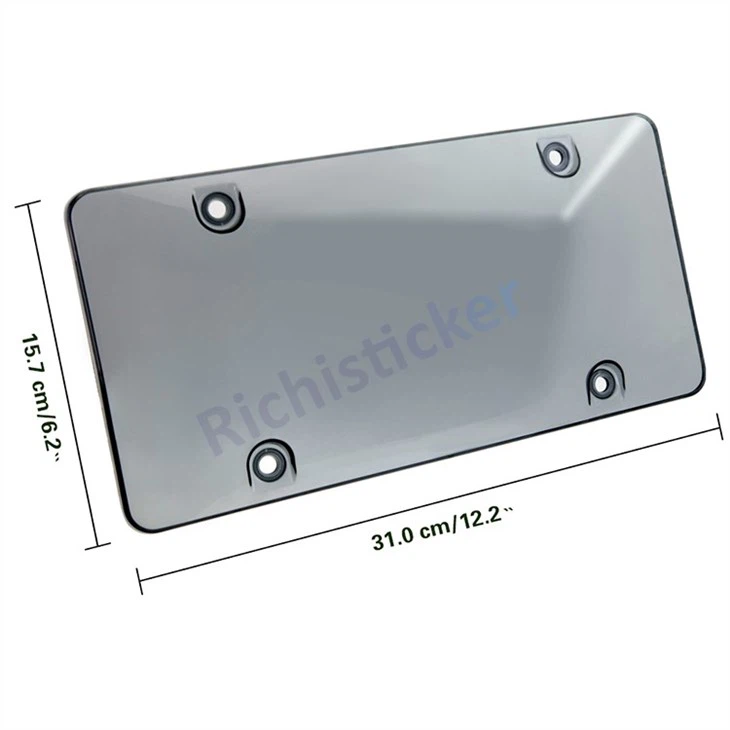
Applications and Benefits of Shock - Absorbent Plastic License Plates
The shock - absorbing properties of plastic license plates have several practical applications and benefits.
Automotive Safety
In the event of a minor collision, a shock - absorbent license plate can help reduce the risk of damage to the vehicle. If a license plate is rigid and unable to absorb the impact, it can transfer the force directly to the vehicle's body, potentially causing more significant damage. Plastic license plates can act as a buffer, absorbing some of the energy and protecting the vehicle.
Longevity
Shock - absorbent plastic license plates are more likely to last longer. They are less prone to damage from daily wear and tear, such as being hit by shopping carts in parking lots or brushed against by branches. This means that vehicle owners don't have to replace their license plates as frequently, which can save them money in the long run.
Aesthetics
Plastic license plates can maintain their appearance better over time. Since they are less likely to develop dents, scratches, or rust, they can keep the vehicle looking clean and professional. This is especially important for businesses that use vehicles for advertising, as a damaged license plate can detract from the overall image.
Our Product Range
As a supplier of plastic license plates, we offer a wide range of products that take advantage of the shock - absorbing properties of plastic.
- Plastic Euro Size License Plate Holder: Our Euro - size license plate holders are made from high - quality plastic that provides excellent shock absorption. They are designed to fit European - standard license plates and offer a secure and stylish way to mount your plates.
- Front and Back Car Plate Bracket Holders: These bracket holders are not only strong and durable but also shock - absorbent. They are suitable for both front and back license plates and can help protect your plates from impacts.
- Personalised License Plate Frames: Our personalised license plate frames allow you to add a unique touch to your vehicle while also providing shock - absorbing protection. You can customize the frames with your own designs or messages.
Contact Us for Procurement
If you're interested in our plastic license plates and related products, we encourage you to reach out to us for procurement discussions. Whether you're an automotive manufacturer, a vehicle fleet manager, or an individual looking for high - quality license plates, we can provide you with the products and solutions you need. Our team of experts is ready to answer your questions and help you find the best options for your specific requirements.
References
- Ashby, M. F. (2005). Materials Selection in Mechanical Design. Butterworth - Heinemann.
- Callister, W. D., & Rethwisch, D. G. (2010). Materials Science and Engineering: An Introduction. Wiley.
- Plastics Europe. (2023). Plastics: The Facts. Plastics Europe.


