


As a seasoned supplier of wine bottle labels, I've had the privilege of witnessing the diverse and intricate world of wine packaging. One of the most common questions I encounter is whether there are differences in wine bottle labels for sparkling and still wines. In this blog, I'll delve into this topic, exploring the unique characteristics, regulations, and design considerations for both types of wines.
Regulatory Requirements
First and foremost, let's discuss the regulatory aspects. Different countries and regions have specific rules regarding wine bottle labels. For still wines, these regulations often focus on the origin of the grapes, the alcohol content, and the vintage. For example, in the European Union, wines labeled with a Protected Designation of Origin (PDO) or Protected Geographical Indication (PGI) must adhere to strict production and labeling guidelines.
Sparkling wines, on the other hand, have additional regulatory requirements. In France, for instance, only wines produced in the Champagne region using the traditional method can be labeled as "Champagne." Other sparkling wines from France may be labeled as "Cremant" or "Mousseux." These terms are protected, and producers must follow specific production processes to use them on their labels.
In the United States, the Alcohol and Tobacco Tax and Trade Bureau (TTB) regulates wine labeling. Sparkling wines must indicate the method of production on the label, such as "Champenoise method" or "Carbonation." This information helps consumers understand how the wine was made and what to expect in terms of flavor and quality.
Design Elements
The design of wine bottle labels also differs between sparkling and still wines. Sparkling wines are often associated with celebration and luxury, so their labels tend to be more elaborate and eye - catching. Gold foiling, embossing, and intricate illustrations are common design elements for sparkling wine labels. For example, our Embossed Wine UV Bronzing Stickers Silk Paper are a popular choice for sparkling wine producers who want to add a touch of elegance to their bottles.
Still wines, on the other hand, may have a more understated design. The focus is often on communicating the wine's origin, varietal, and vintage. Simple fonts, earthy colors, and images of vineyards or wine - making equipment are typical design features for still wine labels. Our Self Adhesive Wine And Liquor Label provides a clean and professional look that is well - suited for still wines.
Information Content
The information presented on the label also varies between sparkling and still wines. For still wines, the label usually includes the name of the winery, the grape variety, the region of origin, the vintage, and the alcohol content. Some labels may also provide tasting notes or food pairing suggestions.
Sparkling wines, in addition to the basic information, often include details about the method of production. As mentioned earlier, the Champagne method is highly regarded, and wines produced using this method may highlight it on the label. Sparkling wines may also indicate the level of sweetness, such as "Brut," "Extra Dry," or "Demi - Sec." This information is crucial for consumers who have specific preferences for the sweetness of their sparkling wine.
Branding and Marketing
Branding plays a significant role in both sparkling and still wine labels. However, the marketing strategies may differ. Sparkling wines are often marketed as a premium product for special occasions. The label design and branding should convey a sense of luxury and celebration. For example, a sparkling wine label with a glamorous logo and a sophisticated color scheme can attract consumers looking for a high - end product for a wedding or a New Year's Eve party.
Still wines, on the other hand, can target a wider range of consumers. They can be marketed as everyday wines for casual dinners or as collector's items for wine enthusiasts. The label design should reflect the brand's identity and the target market. A still wine label with a rustic design may appeal to consumers who prefer traditional, artisanal wines, while a modern and minimalist label may attract younger, more trendy consumers.
Material and Durability
The choice of label material is also important, and it can vary depending on whether the wine is sparkling or still. Sparkling wines are typically bottled under high pressure, which can cause the label to come loose if the adhesive is not strong enough. Our Bronzing Self - Adhesive Wine Labels are designed with a strong adhesive that can withstand the pressure inside a sparkling wine bottle.

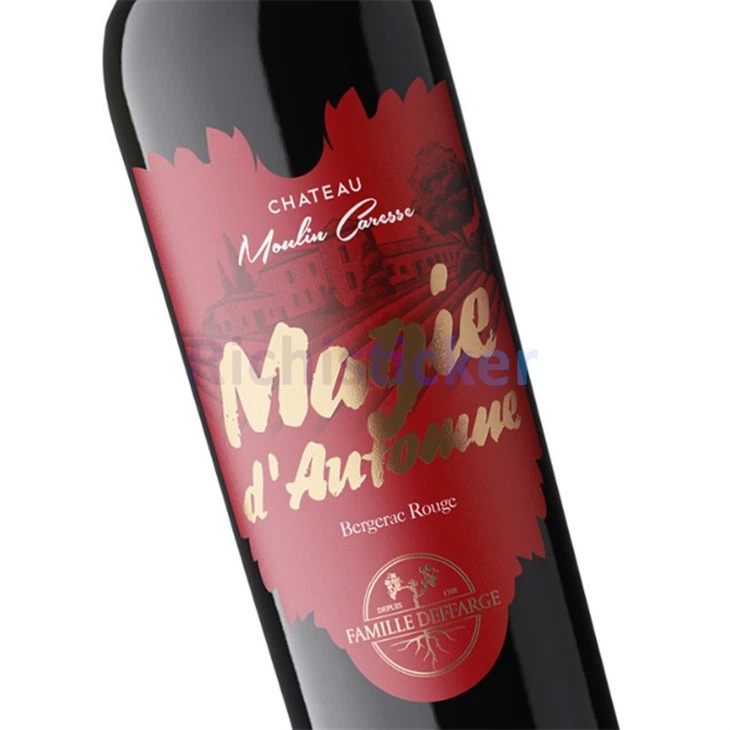
Still wines, which are not under the same pressure, may have more flexibility in terms of label material. Paper labels are a common choice for still wines, as they can be easily printed and provide a classic look. However, for wines that will be stored for a long time, a more durable material may be preferred to prevent the label from fading or peeling.
Consumer Perception
Consumer perception is another factor that influences the differences in wine bottle labels. When consumers see a bottle of sparkling wine, they immediately associate it with celebration and festivity. The label design should reinforce this perception, with bright colors, shiny elements, and a sense of luxury. A well - designed sparkling wine label can make the product more appealing and increase its perceived value.
Still wines, on the other hand, are often associated with relaxation and enjoyment. The label design should create a sense of trust and quality. Consumers may look for familiar grape varieties and regions on the label, and a clear and easy - to - read label can help them make an informed decision.
In conclusion, there are indeed significant differences in wine bottle labels for sparkling and still wines. These differences stem from regulatory requirements, design preferences, information content, branding, material choice, and consumer perception. As a wine bottle label supplier, I understand the importance of creating labels that not only meet the legal requirements but also effectively market the wine. Whether you are a producer of sparkling or still wines, we have a wide range of label options to suit your needs.
If you're interested in discussing your wine bottle label requirements, I invite you to reach out to us. We can work together to create a label that perfectly represents your brand and product.
References
- European Union regulations on wine labeling
- Alcohol and Tobacco Tax and Trade Bureau (TTB) regulations in the United States
- Industry research on consumer perception of wine labels


