


When it comes to license plates, one of the ongoing discussions in the automotive and transportation industry is the comparison between plastic license plates and composite license plates, particularly in terms of weight. As a supplier of plastic license plates, I've delved deep into this topic to understand the nuances and provide valuable insights to our customers.
Understanding the Basics: Plastic and Composite License Plates
Before we jump into the weight comparison, let's briefly understand what plastic and composite license plates are. Plastic license plates are typically made from high - grade polymers. These polymers are chosen for their durability, resistance to weather conditions, and ease of manufacturing. They can be molded into various shapes and sizes, and are often used for their aesthetic appeal as well as practicality.
On the other hand, composite license plates are made by combining different materials. Usually, they consist of a mixture of fibers, resins, and sometimes metals. The goal of creating composite license plates is to achieve a balance between strength, durability, and other desired properties such as fire resistance or electrical conductivity.
The Science of Weight in License Plates
Weight is an important factor in license plates for several reasons. For vehicle owners, a lighter license plate can contribute to better fuel efficiency, especially in the long run. Every extra pound on a vehicle requires more energy to move, and while a license plate may seem like a small addition, over time, the cumulative effect can be significant. Additionally, lighter license plates are easier to install and handle.
From a manufacturing perspective, weight can also impact production costs. Lighter materials may require less energy to process and transport, which can lead to cost savings that can be passed on to the customer.
Plastic License Plates: A Lightweight Option
Plastic license plates are generally known for their lightweight nature. The polymers used in their production have a relatively low density compared to many of the materials used in composite license plates. For example, polycarbonate, a common material for plastic license plates, has a density of around 1.2 g/cm³. This low density means that for a given volume, a plastic license plate will weigh less than a composite license plate made from denser materials.
One of the advantages of the lightweight property of plastic license plates is their ease of installation. They can be easily attached to a vehicle without the need for heavy - duty mounting hardware. This also reduces the stress on the vehicle's body where the license plate is attached, potentially extending the lifespan of the mounting points.
Another benefit is the reduced risk of damage during installation or handling. A lighter license plate is less likely to cause scratches or dents on the vehicle's body during the installation process. And in the event of an accident, a lightweight license plate is less likely to cause additional damage to the vehicle or pose a safety risk to passengers.
Composite License Plates: The Weight Factor
Composite license plates, due to the combination of different materials, can vary widely in weight. Some composite materials are designed to be strong and rigid, which often means using denser fibers or metals. For instance, if a composite license plate contains carbon fibers and a metal matrix, it can be significantly heavier than a plastic license plate.
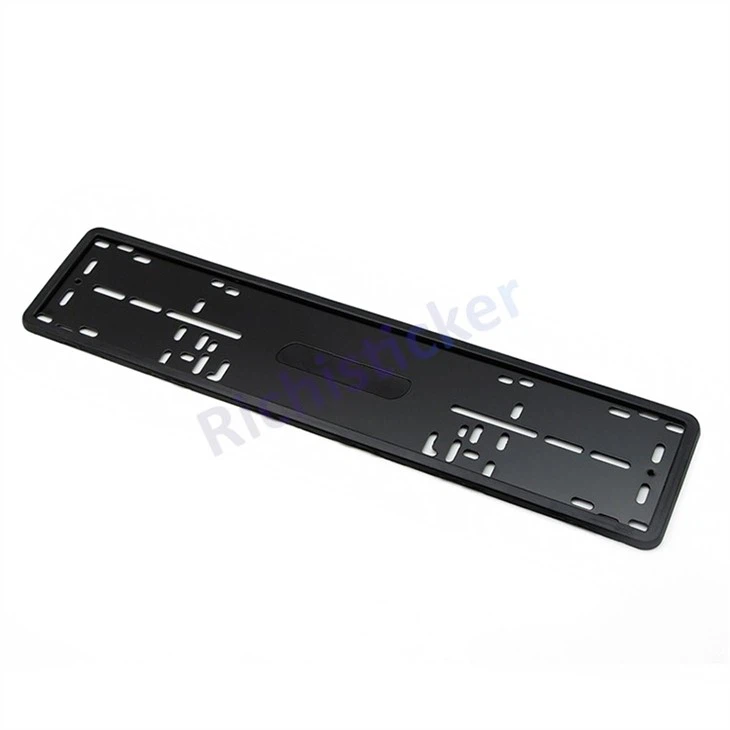

However, not all composite license plates are heavy. Some manufacturers are developing lightweight composite materials that offer a good balance between strength and weight. These advanced composites use high - performance fibers and lightweight resins to create a license plate that is strong enough to withstand the rigors of daily use while still being relatively light.
Real - World Comparisons
To get a better understanding of the weight difference between plastic and composite license plates, let's look at some real - world examples. In a recent study, a standard - sized plastic license plate made from polypropylene weighed approximately 200 grams. In contrast, a composite license plate made from a glass - fiber reinforced resin weighed around 350 grams. This 150 - gram difference may not seem like much at first glance, but when you consider the number of vehicles on the road, the cumulative weight savings can be substantial.
It's also important to note that the weight difference can vary depending on the specific design and application of the license plate. For example, a plastic license plate with additional features such as a built - in LED light for illumination will weigh more than a basic plastic license plate. Similarly, a composite license plate with a high - strength metal frame will be heavier than a more basic composite design.
Our Product Range at [Supplier's Context]
As a supplier of plastic license plates, we offer a wide range of products that showcase the lightweight advantage of plastic. Our Personalised License Plate Frames are not only customizable but also lightweight, allowing customers to add a personal touch to their vehicles without adding unnecessary weight.
Our Front and Back Car Plate Bracket Holders are designed to work seamlessly with our plastic license plates. They are also made from lightweight plastic materials, ensuring that the entire license plate setup is as light as possible.
And for those who need a license plate holder in the Euro size, our Plastic Euro Size License Plate Holder is a great option. It is both lightweight and durable, providing a secure fit for your license plate.
Conclusion and Call to Action
In conclusion, plastic license plates are generally more lightweight than composite license plates. Their low - density polymers make them an ideal choice for vehicle owners who are looking to reduce weight and improve fuel efficiency. At our company, we are committed to providing high - quality, lightweight plastic license plates and related products.
If you're interested in learning more about our plastic license plates or would like to discuss a potential purchase, we encourage you to reach out to us. We have a team of experts ready to answer your questions and help you find the perfect license plate solution for your needs.
References
- "Materials Science and Engineering: An Introduction" by William D. Callister Jr. and David G. Rethwisch
- "Automotive Materials and Manufacturing" by J. Gilbert and W. F. Gale
- Industry reports on license plate manufacturing and materials


