


Hey there! As a supplier of Zinc Alloy Labels, I often get asked if these labels are suitable for harsh industrial environments. It's a great question, and in this blog, I'll share my insights based on my experience and some research.
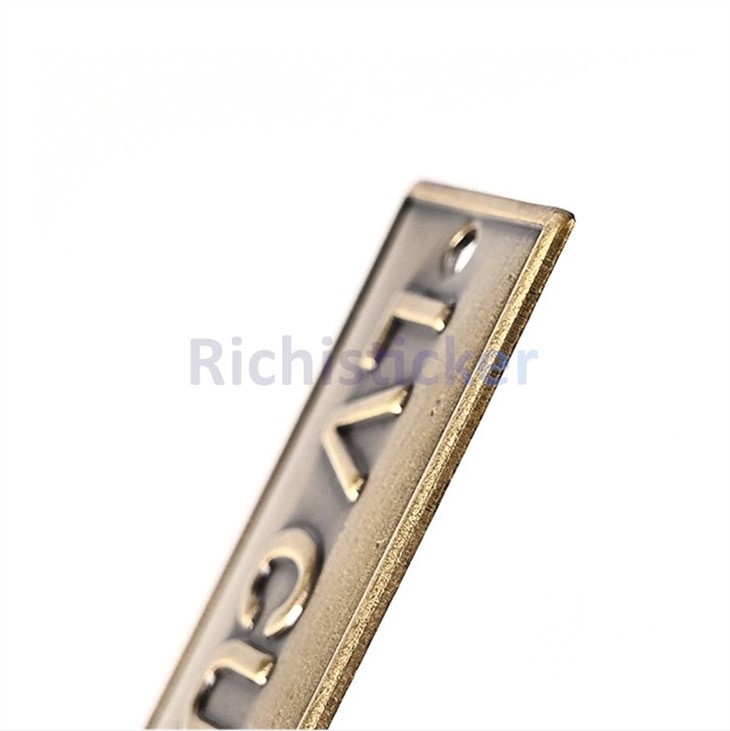

First off, let's talk about what harsh industrial environments are like. These can include places with high temperatures, extreme humidity, exposure to chemicals, dirt, dust, and mechanical stress. In industries such as manufacturing, construction, mining, and automotive, labels need to withstand a lot to stay legible and functional.
Durability of Zinc Alloy Labels
One of the main advantages of zinc alloy labels is their durability. Zinc alloy is a strong material that can resist physical damage. It's less likely to crack, break, or deform compared to some other label materials. In industrial settings where there's a lot of movement, vibration, and rough handling, this is a huge plus.
For example, in a manufacturing plant where heavy machinery is in operation, tools and equipment are constantly being moved around. Zinc alloy labels can stick on these items without getting damaged easily. They can take the knocks and bumps that come with daily industrial use.
Resistance to Environmental Factors
Temperature Resistance
Zinc alloy labels can handle a wide range of temperatures. In high - temperature environments like foundries or near furnaces, they won't melt or lose their shape quickly. On the other hand, in cold storage areas or outdoor industrial sites during winter, they don't become brittle and fall off. This temperature flexibility makes them ideal for various industrial applications across different climate zones.
Humidity and Moisture Resistance
Many industrial environments are humid, either due to natural conditions or processes like washing and cooling. Zinc alloy labels don't rust easily. They have a certain degree of corrosion resistance, which means they can stay in good condition even when exposed to moisture for long periods. This is crucial in industries such as food processing, where equipment is frequently cleaned with water and there's a high level of humidity.
Chemical Resistance
In industrial settings, labels can come into contact with all sorts of chemicals, including solvents, acids, and alkalis. Zinc alloy labels can resist many common industrial chemicals. This ensures that the text and graphics on the labels remain clear and intact. For instance, in a chemical manufacturing plant, the labels on storage tanks and pipelines need to be chemical - resistant so that important information like product names, warnings, and safety instructions can be read at all times.
Adhesion in Industrial Settings
Our Zinc Alloy Labels with Adhesive are designed with high - quality adhesives that can stick well in harsh industrial environments. The adhesive is formulated to withstand temperature changes, vibrations, and exposure to various substances. In fact, it's so strong that the labels won't peel off easily from the surface they're applied to. Whether it's metal, plastic, or glass surfaces in industrial equipment, the adhesive keeps the labels firmly in place.
Aesthetic and Functional Appeal
Zinc alloy labels not only offer durability but also have an aesthetic appeal. They can be customized with different designs, colors, and finishes. In industrial applications, this can be useful for brand recognition. For example, Zinc Alloy Nameplate Metal Furniture Badge can give a professional and high - end look to metal furniture products in an industrial furniture manufacturing setting.
Moreover, the labels can be printed with detailed information such as barcodes, serial numbers, and QR codes. This is very useful for inventory management, product tracking, and quality control in industrial operations. For businesses, Brand Name Metal Zinc Alloy Plates can help promote their brand and make their products stand out in the market.
Cost - Effectiveness
When it comes to cost, zinc alloy labels are a great option for industrial use. They may have a slightly higher upfront cost compared to some other label materials, but considering their long - term durability and performance, they offer a good return on investment. You won't have to replace them as often as you would with cheaper, less durable labels. This saves both time and money in the long run, especially in large - scale industrial operations.
Limitations to Consider
Of course, no product is perfect. Zinc alloy labels do have some limitations. In extremely corrosive environments with highly concentrated chemicals, they may eventually show signs of wear. Also, if the mechanical stress is too extreme, such as in high - pressure forging operations, the labels could potentially deform. But for most common harsh industrial environments, these limitations are minimal.
Conclusion
In conclusion, zinc alloy labels are generally very suitable for harsh industrial environments. Their durability, resistance to environmental factors, good adhesion, aesthetic and functional appeal, and cost - effectiveness make them a top choice for many industrial applications.
If you're in the market for high - quality zinc alloy labels for your industrial needs, I'd be more than happy to have a chat with you. Whether you're looking for custom designs, specific size requirements, or just want to learn more about our products, don't hesitate to reach out and start the procurement discussion.
References
Smith, J. (2020). "Materials for Industrial Labeling". Industrial Supply Journal.
Brown, A. (2019). "Zinc Alloy Properties and Applications". Metal Science Review.


