


In the automotive world, license plates are not just a legal requirement but also a part of a vehicle's identity. While traditional metal license plates have long been the norm, plastic license plates are gaining popularity due to their versatility, customization options, and cost - effectiveness. As a supplier of plastic license plates, one of the most common questions I encounter is how well these plastic license plates stand up to impacts. In this blog, we'll delve into the science behind the impact resistance of plastic license plates and explore the factors that contribute to their durability.
Composition of Plastic License Plates
Plastic license plates are typically made from high - quality polymers. The most commonly used plastics include polycarbonate, acrylic, and polyethylene. Each of these materials has unique properties that affect the plate's ability to withstand impacts.
Polycarbonate is known for its exceptional impact resistance. It is a tough, transparent thermoplastic that can absorb a significant amount of energy before breaking. This makes it an ideal choice for license plates that may be exposed to various impacts, such as from flying debris on the road or minor collisions.
Acrylic, on the other hand, offers good optical clarity and a high - gloss finish. While it is not as impact - resistant as polycarbonate, it can still withstand moderate impacts. Acrylic license plates are often chosen for their aesthetic appeal, as they can be easily customized with vibrant colors and designs.
Polyethylene is a lightweight and flexible plastic. It has a relatively low cost and is resistant to moisture and chemicals. Although it may not have the same level of impact resistance as polycarbonate, its flexibility allows it to bend rather than break under certain impacts.
Testing the Impact Resistance
To determine how well plastic license plates can stand up to impacts, various testing methods are employed. One common test is the drop test. In this test, a license plate is dropped from a specific height onto a hard surface. The height and the surface material can be adjusted to simulate different real - world scenarios.
Another test is the pendulum impact test. A pendulum with a known mass and velocity is swung into the license plate. The amount of energy absorbed by the plate and the extent of damage are measured. These tests help manufacturers understand the performance of their plastic license plates under different impact conditions.
Factors Affecting Impact Resistance
Several factors can influence how well a plastic license plate withstands impacts.
Thickness
The thickness of the plastic plate plays a crucial role in its impact resistance. Generally, thicker plates are more resistant to impacts. A thicker layer of plastic can absorb more energy before cracking or breaking. However, increasing the thickness also adds to the weight and cost of the license plate. Therefore, manufacturers need to find a balance between thickness, weight, and cost.
Design and Structure
The design of the license plate can also affect its impact resistance. For example, plates with reinforced edges or a ribbed structure are more likely to distribute the impact force evenly, reducing the risk of damage. Additionally, the way the license plate is attached to the vehicle can impact its performance. A well - designed mounting system can help absorb some of the impact energy and prevent the plate from detaching or cracking.
Environmental Conditions
Environmental factors such as temperature and humidity can also affect the impact resistance of plastic license plates. At low temperatures, plastics can become more brittle, making them more prone to cracking under impact. High humidity, on the other hand, can cause some plastics to absorb moisture, which may weaken their structure over time.
Real - World Performance
In real - world scenarios, plastic license plates are exposed to a variety of impacts. On the road, they can be hit by stones, gravel, or other debris kicked up by passing vehicles. They may also be subject to minor collisions in parking lots or during low - speed fender benders.
Despite these challenges, plastic license plates have proven to be quite durable. Many drivers have reported that their plastic license plates have withstood years of use without significant damage. Of course, the performance can vary depending on the quality of the plate, the driving conditions, and the type of impacts it encounters.
Customization and Impact Resistance
One of the advantages of plastic license plates is the ability to customize them. You can choose from a wide range of colors, designs, and even add personalized text. However, it's important to note that some customization options may affect the impact resistance of the plate.
For example, applying a thick layer of paint or adding heavy - duty decals may change the balance of the plate and make it more vulnerable to impacts. When customizing a plastic license plate, it's essential to work with a reputable supplier who can ensure that the customization process does not compromise the plate's durability.
Our Product Range
As a supplier of plastic license plates, we offer a diverse range of products to meet the needs of different customers. Our Plastic Euro Size License Plate Holder is designed to fit European - sized license plates perfectly. It is made from high - quality plastic that provides excellent impact resistance and a sleek appearance.
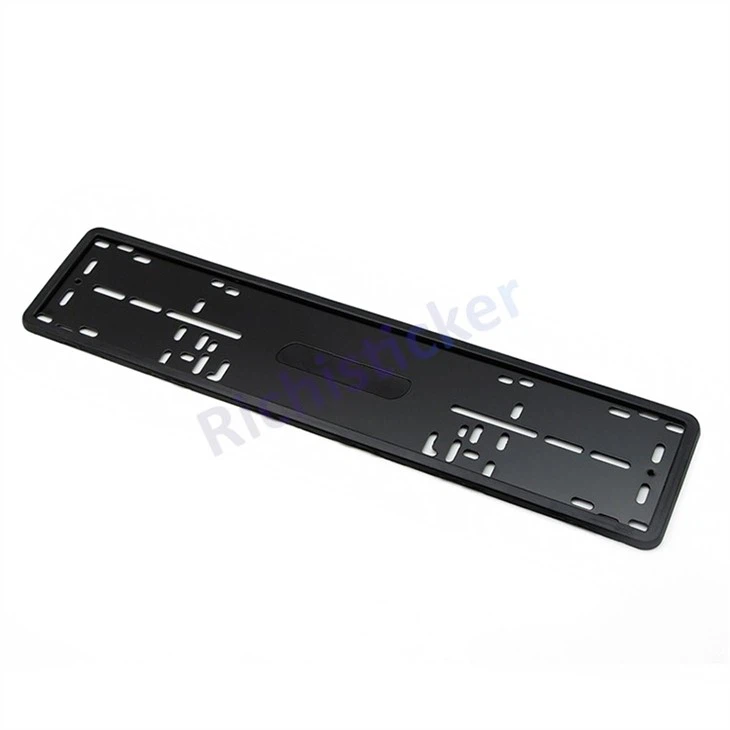

Our Front and Back Car Plate Bracket Holders are sturdy and reliable. They are designed to securely hold the license plates in place, reducing the risk of damage during impacts.
If you're looking for something more personalized, our Personalised License Plate Frames are the perfect choice. You can add your own unique touch while still enjoying the durability and impact resistance of our plastic products.
Conclusion
Plastic license plates offer a combination of durability, customization, and cost - effectiveness. While their impact resistance may vary depending on the material, design, and environmental conditions, they have proven to be a reliable option for many drivers.
If you're interested in purchasing high - quality plastic license plates or have any questions about their impact resistance, we'd love to hear from you. Contact us to discuss your requirements and explore our product range. We're committed to providing you with the best plastic license plate solutions that meet your needs and exceed your expectations.
References
- ASTM International. (20XX). Standard test methods for impact resistance of plastics and electrical insulating materials.
- Smith, J. (20XX). The properties and applications of plastics in automotive components. Journal of Automotive Engineering, XX(XX), XX - XX.
- Johnson, R. (20XX). Impact testing of plastic materials: A review. Polymer Testing, XX(XX), XX - XX.


